
AI for Popularizing Ukraine’s Place in Europe’s Shared Cultural Space
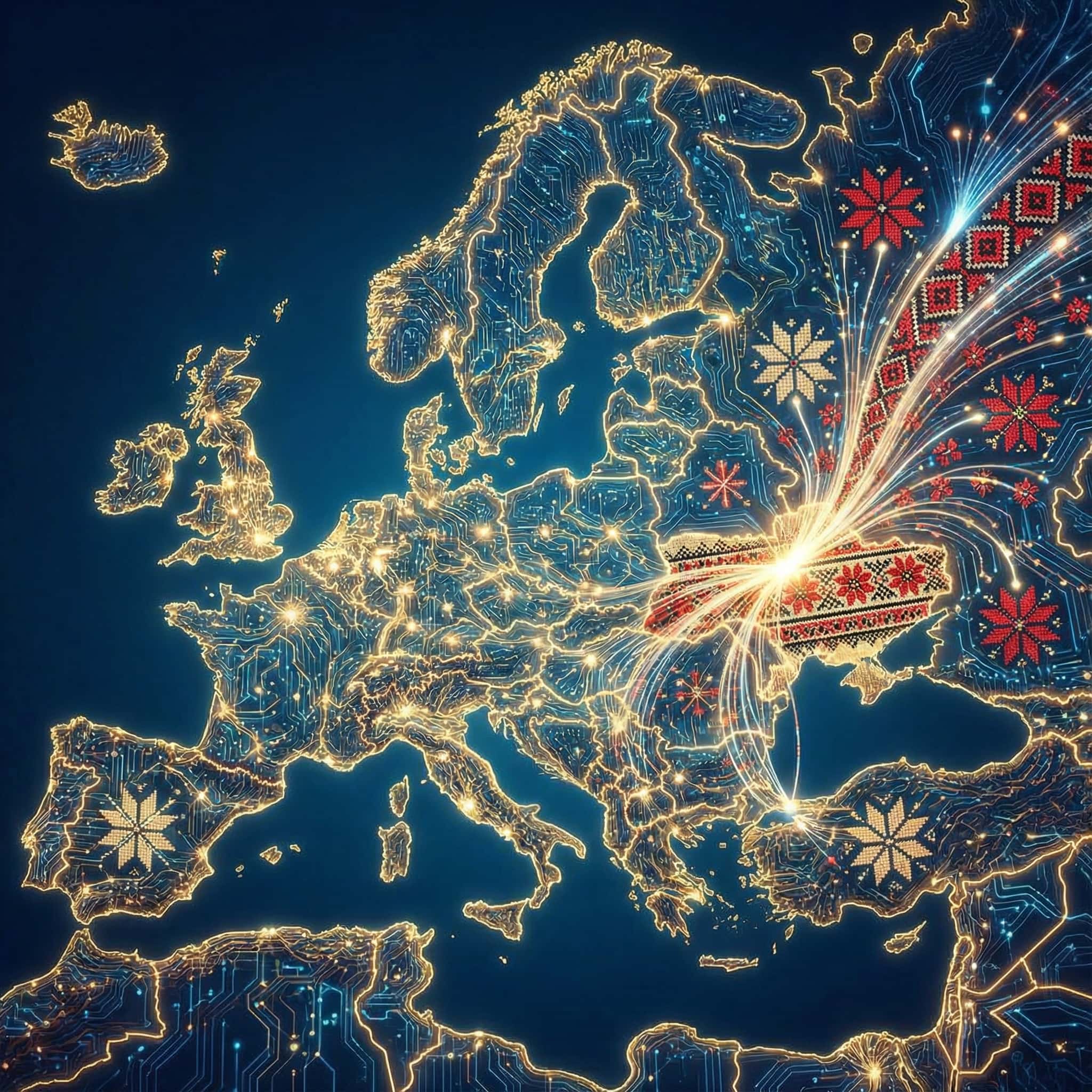
Ukrainian cultural heritage—language, art, historical artifacts—is an integral part of Europe’s cultural diversity. However, due to recent challenges, including wartime destruction, there is an urgent need for the digital preservation and promotion of this heritage. Contemporary artificial intelligence (AI) technologies are becoming key tools for digitizing, protecting, and re-interpreting cultural assets so that Ukrainian cultural identity remains accessible and recognizable within Europe’s shared cultural space [1, 2]. Below, we analyze scholarly approaches, applied cases, and international initiatives that illustrate AI’s role in this domain.
Digitization and Preservation of Heritage with AI
The introduction of AI is radically expanding the possibilities for digitally preserving cultural assets. Computer vision and deep learning algorithms are already used in museums, archives, and libraries to automate digitization and cataloging processes [1]. In particular, AI can automatically generate metadata for exhibits (for example, recognizing images of artworks and adding descriptions) and restore damaged historical objects—e.g., reconstruct missing fragments in digital images or 3D models of artifacts [1]. In addition, neural networks can assist conservators by analyzing the condition of objects and predicting optimal conservation methods.
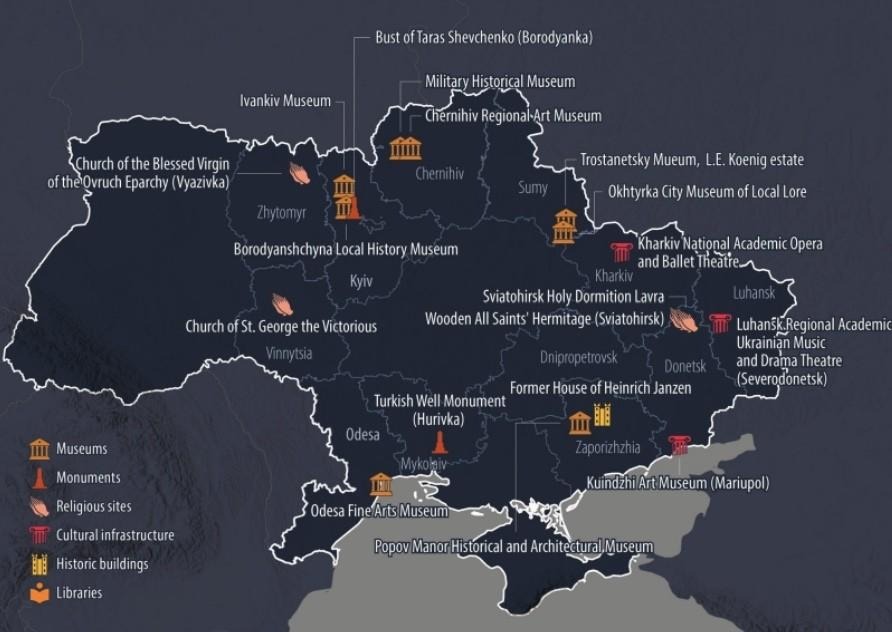
AI-enhanced 3D scanning and photogrammetry play a significant role in safeguarding monuments. A telling example is the volunteer project “Backup Ukraine,” which enables anyone to become a “digital archivist.” Using a special AI-based mobile application, Ukrainians create three-dimensional models of buildings and monuments directly from a smartphone to document them before they are destroyed or damaged [3]. The resulting 3D scans are uploaded to cloud storage, forming a permanent digital archive of cultural landmarks. This crowdsourced initiative is implemented in partnership with UNESCO and Blue Shield Denmark, as traditional methods of recording heritage during war are limited, and innovative technologies become extremely relevant for its rescue [3]. In its first year, specialists and volunteers digitized over 100 significant sites (Figure 1)—from wooden churches to historic buildings—within the #SaveUkrainianHeritage campaign [3]. The creation of high-precision digital copies ensures that even if the original is lost, its appearance and proportions will be preserved for future generations.
Interpretation and Presentation of Heritage with AI
Artificial intelligence opens innovative approaches not only to preservation but also to presenting cultural heritage to the public. Virtual and augmented reality (VR/AR) combined with AI make it possible to create interactive exhibitions that immerse audiences in historical context. Using machine learning, museum displays can be augmented with virtual guides, 3D reconstructions, or personalized content. For example, visitors can take virtual tours of historical sites in Ukraine from anywhere in the world and receive personalized recommendations based on their interests [1]. Such solutions increase engagement: audiences do not merely passively consume information but interact with cultural content in gamified or immersive form.
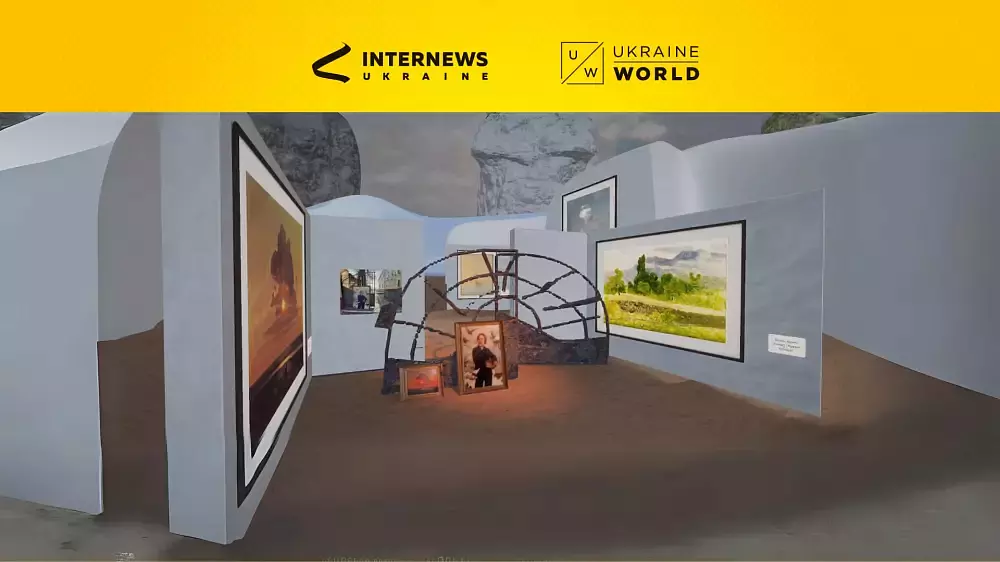
A striking case is the volunteer-launched online “Museum of Stolen Art” (Figure 2). This multimedia project offers visitors a virtual 3D tour of a digital hall featuring high-precision copies of 15 artworks stolen by Russian forces from museums in Mariupol [4]. On the project’s website, users enter the museum’s metaverse, where they can view digitized paintings as if in a real exhibition hall and interact with the exhibits (access reference information, change viewing angles, etc.). This virtual exhibition not only informs about the stolen masterpieces but also evokes an emotional response, allowing visitors to feel the drama of cultural loss caused by the war [4]. The project effectively serves a dual purpose: on the one hand, it preserves the memory of the looted artifacts; on the other, it functions as an instrument of cultural diplomacy, drawing global attention to the destruction of Ukrainian heritage.
International Initiatives and Cultural Diplomacy
Ukrainian cultural institutions are increasingly integrating into European projects and partnerships to work with international colleagues in safeguarding heritage and promoting it worldwide. Such collaborations are often supported by EU cultural diplomacy programs. One example is the AISTER project (AI-enabled Citizen Participation in University-driven Ukrainian Cultural Heritage Safeguarding), launched in 2025 with Erasmus+ support. It brought together the Center for Contemporary and Digital History at the University of Luxembourg (coordinator), the Web2Learn platform (Greece), the University of Latvia, the European digital library Europeana, and Taras Shevchenko National University of Kyiv [2]. The consortium’s goal is to research and implement AI opportunities to protect Ukrainian cultural heritage, especially that threatened by war [2]. The Ukrainian team at TSNUK, within AISTER, is creating a database of archaeological sites destroyed by hostilities (the “Archaeolandscapes” subproject), participating in damage documentation, and developing rapid-response protocols for museums and reserves [2]. The project provides for regular knowledge exchange: expert roundtables have already been held on AI’s potential and risks in heritage protection, and hackathons are planned (in 2026 in Luxembourg) to develop digital tools for heritage documentation accessible to all professionals [2]. Training the next generation of specialists is also key: AISTER organizes workshops for museum professionals, educators, and community leaders on applying AI in practice [2]. The project will conclude with an international symposium and the development of the “AISTER Manifesto”—recommendations for universities, cultural institutions, and European governments on using AI and engaging the public in protecting cultural heritage during emergencies [2].
Another example of large-scale collaboration is the creation of the European 3D-4CH Competence Centre (Online Competence Centre in 3D for Cultural Heritage) within an EU-funded project launched in early 2025. This centre aims to transform approaches to digitally archiving heritage by uniting leading EU and Ukrainian institutions in 3D digitization, AI, and XR technologies [5]. For the first time in European practice, a special focus is placed on Ukrainian heritage: Ukrainian museums and researchers are actively involved across all workstreams. A dedicated infrastructure is being created to integrate Ukrainian 3D content into the common European data space for cultural heritage [5]. Thus, digitized Ukrainian landmarks and collections will be accessible via pan-European platforms (e.g., Europeana), fostering their recognition and inclusion in the shared panorama of European culture. Building on prior initiatives such as Save Ukraine Monuments (SUM), 3D-4CH also provides training programs, knowledge exchange, and guidelines on 3D scanning and AI for the cultural sector [5].
At the institutional level, the European Union systematically supports the digitization of Ukrainian culture as part of its policy of solidarity and cultural diplomacy. In July 2025, the EU and its Member States launched the “Team Europe for Ukraine’s Cultural Heritage” initiative to finance artifact protection, provide scholarships and training for Ukrainian professionals, and safeguard the most valuable collections [6]. At the same time, the European Commission increased the budget of special Creative Europe calls for Ukraine, bringing total EU cultural assistance since the start of the war to over €50 million [6]. As noted by the European Commissioner for Culture Glenn Micallef, supporting Ukrainian culture is essential because “to destroy a nation, it is enough to attack its culture.” The resilience of Ukraine’s cultural heritage determines not only the country’s national identity but also our shared European future [6]. Therefore, the EU will continue helping Ukraine defend, restore, and promote its culture on the international stage. Under Team Europe, more than 60 concrete actions are being implemented: from emergency conservation of monuments and support for artists in Ukraine and abroad to expanding access to Ukrainian culture for Europe’s wider public (through translations, joint exhibitions, exchange programs, etc.) [6]. In addition, with EU support, Ukrainian institutions are joining pan-European projects for the digital transformation of culture, shaping a unified digital space where Ukrainian heritage is represented on an equal footing with other European cultures [5].
AI for Language and the Accessibility of Ukrainian Culture
Language, as a bearer of cultural memory, deserves special attention, and artificial intelligence today is an important ally in its preservation and promotion. Thanks to natural language processing (NLP), projects are emerging that overcome language barriers and make Ukrainian cultural products understandable worldwide. For instance, automated systems are being developed to translate Ukrainian literary works, films, or exhibition descriptions into European languages while preserving style and nuances. Separate initiatives target the languages of Ukraine’s national minorities: within the HATA Hub acceleration program, a project created a digital Crimean Tatar–Ukrainian dictionary with API access for developers, aimed at improving machine translation models for this language [7]. The accumulation of such linguistic corpora and their integration into AI platforms not only rescues Crimean Tatar and other languages from oblivion but also ensures the presence of Ukrainian cultural content in the global information space. As a result, international audiences receive tools to discover Ukrainian culture in their native language, while Ukrainian consolidates its position in the digital world.
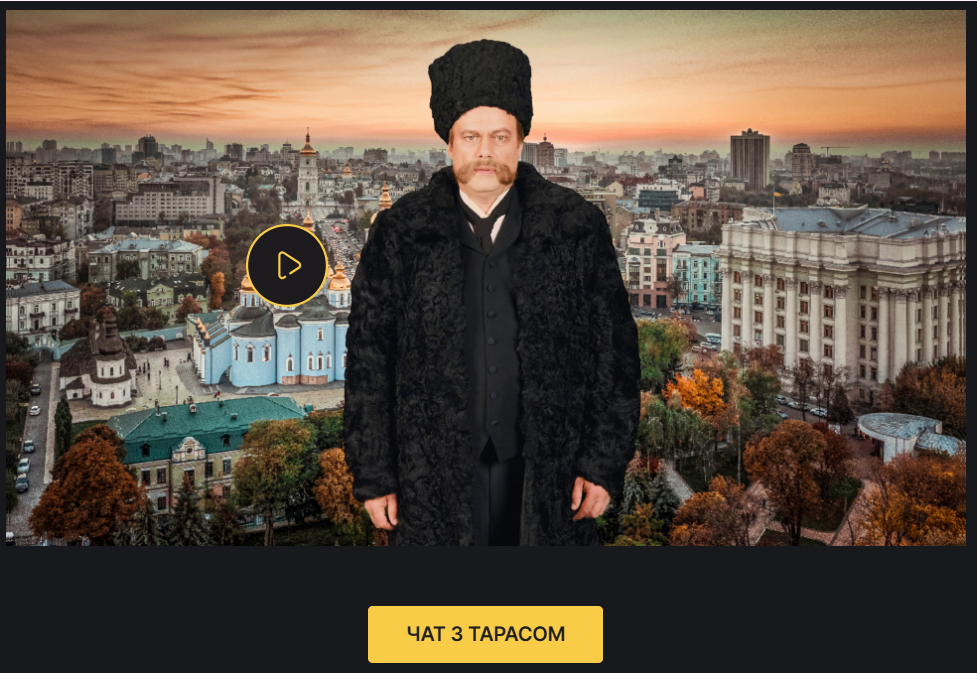
Beyond the behind-the-scenes improvements (e.g., better search algorithms or translators), AI can directly engage people with Ukrainian culture. An innovative example is “Digital Taras Shevchenko” (Figure 3), implemented as an AI-based chatbot [8]. This project by RAVATAR created an interactive avatar of Ukraine’s most famous poet, with whom users can converse in real time via the Telegram messenger [8]. The virtual Shevchenko runs on a large language model (GPT) trained on the poet’s works—his poetry, prose, and letters—which enables the bot to generate responses in Shevchenko’s spirit and even speak in the characteristic language of the 19th century [8]. Moreover, the system supports multimedia replies: users can receive not only text but also audio (and even video) synthesized with an authentic Shevchenko voice based on archival recordings [8]. Thus, modern technology literally “brings a historical figure to life.” From the standpoint of cultural promotion, the “digital kobzar” serves as a cultural ambassador of Ukraine to the world: through interaction with the bot, the hundreds of millions of Telegram users can discover the richness of Ukrainian literature and history, overcoming linguistic or geographic barriers [8]. The initiative also makes a practical contribution to heritage preservation—voluntary user donations go to support real projects protecting Ukrainian cultural heritage [8]. In this way, the AI project combines educational, promotional, and charitable functions, demonstrating how cutting-edge technologies can amplify the presence of the Ukrainian language and culture in the digital era.
Artificial intelligence has already proven effective in the realm of Ukraine’s cultural heritage. It helps digitize museums and archives, automate routine processes, and save thousands of artifacts from destruction [1]. Thanks to AI, Ukrainian culture is becoming more accessible to a global audience—through interactive platforms, virtual tours, and multilingual translation systems. At the same time, ethical challenges must be considered: the authenticity of digital reconstructions, data protection, and the reliability of AI-based interpretations require governance and standards [1, 2]. Ultimately, the synergy of Ukrainian and European expertise, the support of international programs, and creative approaches to AI solutions create powerful potential not only to preserve Ukrainian cultural heritage, but also to secure its rightful place within Europe’s shared cultural space.
References
- AI tools for the preservation and promotion of cultural heritage. DOAJ. Available at: https://doaj.org/article/935da2d062c84c79812dd2a5236aeebc (accessed 12.11.2025).
- TSNUK in the AISTER project: international cooperation to protect cultural heritage. Official TSNUK website. Available at: https://knu.ua/news/13811 (accessed 12.11.2025).
- This app is helping to protect Ukraine’s cultural heritage. World Economic Forum. Available at: https://www.weforum.org/stories/2023/01/ukraine-cultural-heritage-technology-3d/ (accessed 12.11.2025).
- Museum of Stolen Art: Treasures that Cannot Be Stolen from Our Hearts. UkraineWorld. Available at: https://ukraineworld.org/en/articles/analysis/museum-stolen-art (accessed 12.11.2025).
- Shaping the future of cultural heritage with 3D-4CH. CARARE. Available at: https://www.carare.eu/en/news/shaping-the-future-of-cultural-heritage-with-3d-4ch/ (accessed 12.11.2025).
- EU steps up support for Ukraine’s culture and heritage. European Commission – Enlargement & Eastern Neighbourhood (11.07.2025). Available at: https://enlargement.ec.europa.eu/news/eu-steps-support-ukraines-culture-and-heritage-2025-07-11_en (accessed 12.11.2025).
- 15 projects for the digitization of Ukraine’s cultural heritage to take part in the HATA Hub program. PRAGMATIKA.MEDIA. Available at: https://pragmatika.media/news/15-proiektiv-didzhytalizatsii-kulturnoi-spadshchyny-ukrainy-vizmut-uchast-v-prohrami-hata-hub/ (accessed 12.11.2025).
- Taras Shevchenko – AI Chatbot. RAVATAR (Real-time Interactive 3D AI Avatars and Digital Humans). Available at: https://ravatar.com/taras-shevchenko-ai-ua/ (accessed 12.11.2025).
Working together with



.png)