
Building AI for Culture
Artificial Intelligence is rapidly entering the cultural sector, bringing new opportunities for interpretation, engagement, and accessibility. Yet building AI tools for museums is fundamentally different from developing software in traditional commercial environments. Instead of optimising for conversions or scale, cultural institutions prioritise sustainability, visitor comfort, and respect for centuries of artistic heritage.
This article offers a behind-the-scenes look at how a software development team approached the creation of an AI-powered cultural web application. It highlights what makes this work unique, how collaboration with museums shapes the product, and why thoughtful, ethical design is essential when technology meets culture.
Hands-On Collaboration: Workshops as a Design Method
Unlike typical tech projects, where collaboration often happens through digital tools, slides, and remote meetings, cultural institutions require hands-on, in-person workshops. These sessions bring together representatives from curatorial, education, marketing, mediation, and technical departments, each with different priorities and perspectives.
Many of these museum professionals are already overworked, and digital innovation often falls outside their normal responsibilities. That means two things become essential:
- Come extremely well-prepared to make efficient use of their limited time.
- Collect as much knowledge and feedback as possible in each workshop.
The workshops typically involve live demos, prototype testing, and open discussions. They surface unexpected insights,not only about what museums want, but how they think. One recurring theme emerged early:
Museum professionals see themselves as protectors of art and visitors.
Their first concern is always:
“How will this impact people and the artworks?”
This shapes the entire development approach.
Aligning with Museum Priorities: Sustainability Over Novelty
Although similar to tech clients in structure, museum teams differ in priorities. Their central question is not “What is the most innovative feature?” but rather:
“How do we do this sustainably so it doesn’t create long-term burden for the institution?”
This perspective forces developers to think in terms of durability, reproducibility, and minimal maintenance. It also requires balancing the needs of multiple internal stakeholders who often have differing opinions about what the system should do.
As developers, this meant placing more emphasis on in-person evaluation, long-term clarity, and practical constraints, and less on rapid feature expansion.
Design Priorities: Minimal Screens, Maximum Impact
From the beginning, one challenge stood above all others:
How to make the experience as simple and intuitive as possible for visitors with the least amount of screen time.
Visitors come to museums for the art, not the interface. The goal was to create an AI experience that:
- works instantly and smoothly
- requires minimal instructions
- feels playful rather than technical
- adds value without stealing attention from the exhibition
To achieve this, speed and UX became the top priorities. QR codes were used because they are universally understood. Calls-to-action were stripped down to the essentials. The entire process, from scanning to interacting, needed to feel effortless.
AI Capabilities: Playfulness Meets Cultural Context
The application revolves around a playful interpretative mechanism:
visitors take a selfie, which is then transformed into a personalised artwork-inspired representation while delivering context about the original piece.
The system includes:
- face-swapping aligned with artworks
- short-form contextual information about the artwork
- sharing capabilities for social media
- and soon: printing postcards on-site to turn a digital interaction into a personal physical memory
This is not AI for efficiency, it is AI for participation, making visitors part of the narrative while still learning about the cultural material.
Technical Constraints: Designed for Low Connectivity and High Trust
Cultural institutions often operate in older buildings with thick stone walls, patchy Wi-Fi, or limited mobile data. For this reason, the system was engineered to use minimal data and function reliably even under weak connectivity.
Equally important, the team wanted visitors to feel safe using the tool. That meant designing the system to be data-minimising and privacy-first, in line with the spirit of the EU AI Act.
Key principles included:
- privacy
- explainability
- transparency
- data minimisation
This ensures visitors feel comfortable participating, knowing the system doesn’t collect or store unnecessary information.
User Experience: Designed for Everyone
Visitors were included in the development process through live testing, and the feedback was clear:
people genuinely enjoyed the experience.
This gave the team confidence that AI can be used not only as an interpretive tool but also as a medium of joy and connection.
Museum staff offered essential input on details such as:
- how the selfie capture process should work
- where and when QR codes should be placed
- how to guide visitors without overwhelming them
The result is an interface that feels familiar, light, and culturally respectful.
What Makes Cultural AI Different?
There are several elements that make building AI for culture unique:
- Technology must never overshadow the art.
- Visitors vary widely in age, background, and digital confidence.
- Ethical responsibility is higher because museums are public trust institutions.
- Creative flexibility must coexist with stability and reproducibility.
The biggest difference comes from the mindset shift developers must adopt:
Every new feature must pass one question:
“What was the old way of doing this, and does this new way truly improve it?”
This prevents “tech for tech’s sake” and keeps the focus on meaningful enhancements.
What Developers Learn from Culture
Hands-on workshops with museums reveal something essential:
cultural institutions thrive on dialogue.
The more voices included, the stronger the solution. Developers quickly learn that:
- cultural value is co-created, not engineered
- practical constraints are as important as creative ambitions
- participation matters as much as performance
This environment encourages technical teams to slow down, listen more deeply, and design with care.
The Future of AI in Museums
AI will enter museums slowly and thoughtfully — not in dramatic leaps, but in layers, improving operations step by step.
- Back-office will see automated cataloguing, digitisation support, and workflow optimisation.
- Core visitor services will see adaptive guides, accessibility tools, and personalised interpretation.
- Exhibition-specific elements will continue to offer creative, experimental installations that delight audiences.
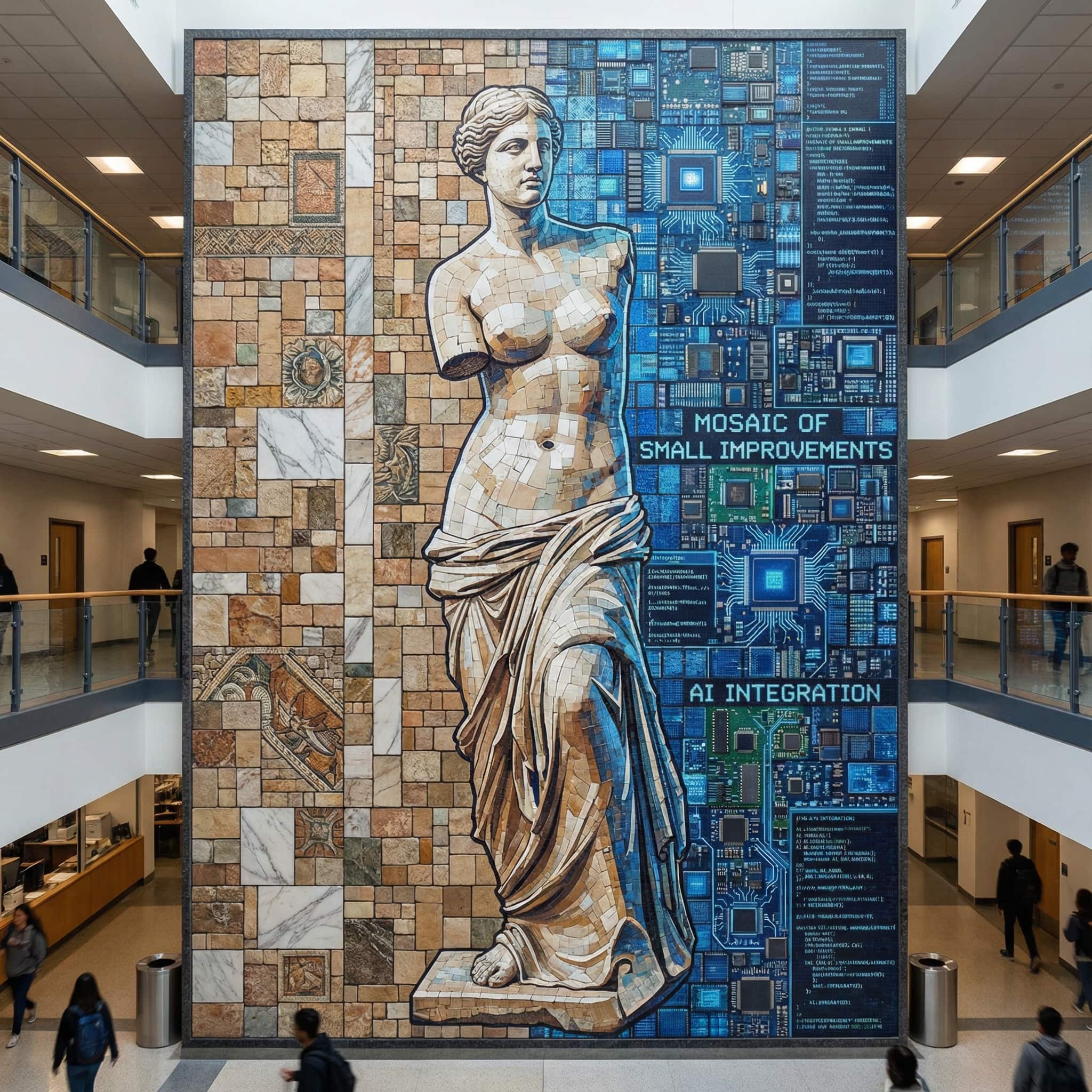
The future will not be defined by any single AI breakthrough, but by a mosaic of small, reproducible improvements that enhance accessibility, interpretation, and engagement.
Conclusion
Building AI for culture requires a different mindset than building AI for commerce. It demands sensitivity, collaboration, humility, and deep respect for the visitor experience. When software developers and cultural professionals work closely together, the result is not just a tool, but a bridge between tradition and innovation, connecting people to culture in new and meaningful ways.
Working together with



.png)