
From Archives to Algorithms: The Role of Cultural Institutions in the Advancement of AI-driven Storytelling
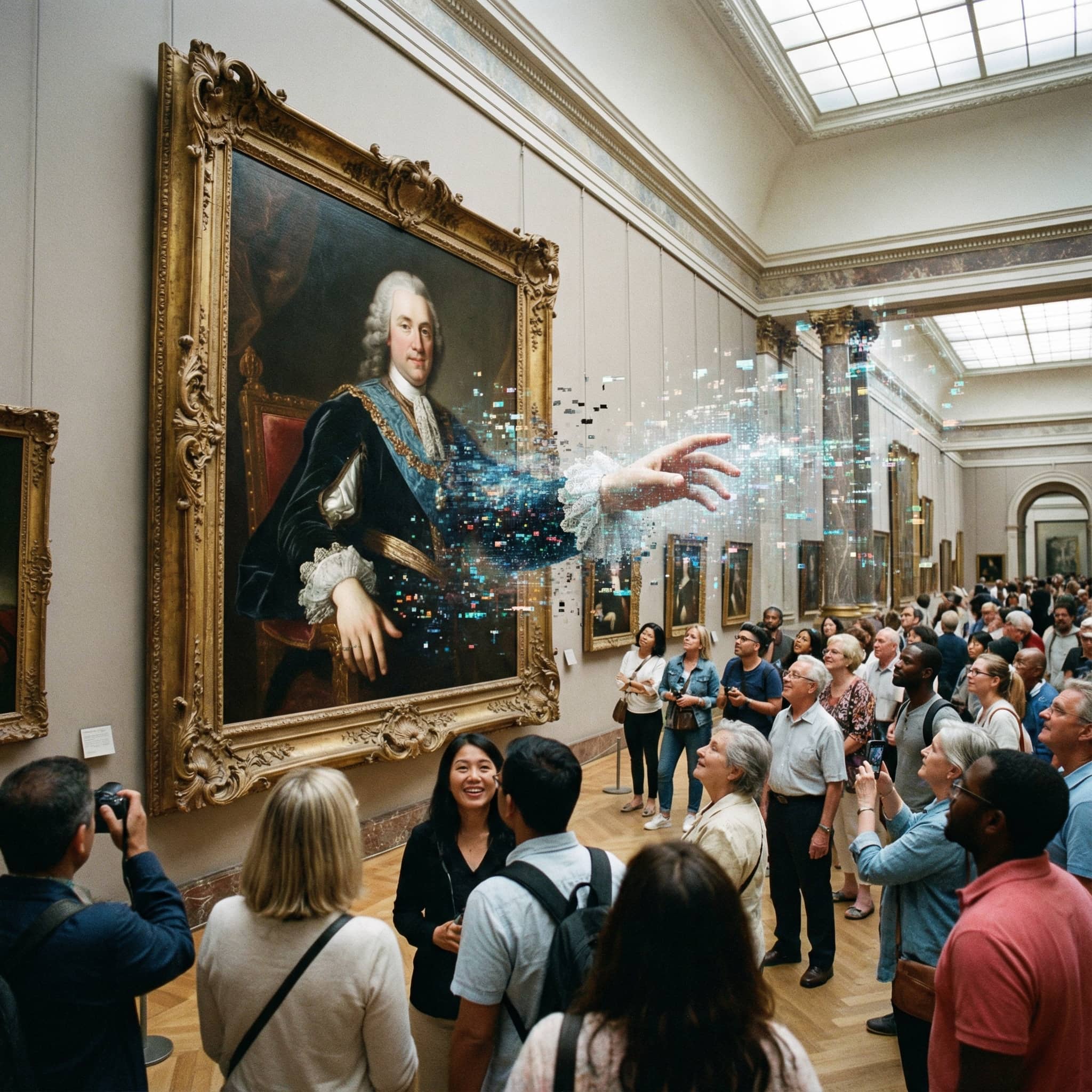
Cultural institutions across Europe maintain extensive repositories of human knowledge, artistic expression, and collective memory. In recent years, these institutions have increasingly been recognized not only as custodians of heritage but also as strategic contributors to the development of emerging digital technologies. Among these technologies, artificial intelligence (AI) presents new opportunities to enhance the interpretation, accessibility, and relevance of cultural heritage. The Talking Heads - Conversation with the Art of the Past project lead by the Center for Social Innovations Blink 42-21 from North Macedonia in partnership with museums and cultural institutions from seven European countries serves as a demonstrative case for how curated cultural data can inform AI-driven narrative experiences that remain anchored in scholarly rigor and institutional values.
The Talking Heads project operationalizes AI as a vehicle for contextual interpretation by enabling selected artworks such as sculptures and paintings of historic persons to engage visitors in interactive dialogue. Through this approach, the project illustrates how algorithmic systems can complement traditional museum interpretation without supplanting professional curatorial expertise. The dialogues generated by the system are grounded in authoritative institutional research, ensuring that the resulting narratives are factually supported, culturally sensitive, and consistent with established educational approaches.
Cultural Heritage as High-Value Data for AI Systems
Modern AI models rely on extensive datasets to operate effectively. Yet the quality, reliability, and contextual integrity of these datasets is often inconsistent, particularly when data is sourced indiscriminately from open internet environments. Museums, archives, and libraries possess a markedly different type of data ecosystem: one that is curated, contextualized, and verified by domain experts.
Scholarly collections containing artworks, documents, images, catalogues, and metadata constitute a high-value substrate for AI training and fine-tuning. This material not only conveys factual information but also embodies interpretive frameworks, disciplinary methodologies, and cultural narratives that help ensure AI systems generate outputs that are accurate, trustworthy, and reflective of diverse perspectives.
However, the full potential of this data remains underutilized. A significant portion of museum holdings in Europe has yet to be digitized, and even smaller portions are available in interoperable, machine-readable formats suitable for AI applications. The European Commission’s Common European Data Space for Cultural Heritage aims to address these gaps by providing a unified infrastructure and governance framework for cross-institutional data sharing, long-term preservation, and advanced reuse. Through this initiative, cultural institutions can assume an active role in shaping the quality and representativeness of the datasets that underpin future AI systems.
Human Expertise, Ethics, and Institutional Responsibility
As cultural institutions adopt AI-driven tools, the role of human expertise becomes even more pivotal. Museums and archives serve as trusted public institutions whose interpretive authority stems from scholarly rigor, ethical stewardship, and accountability to diverse communities. These responsibilities cannot be delegated entirely to algorithmic systems.
AI systems designed for the cultural domain must therefore be developed under direct curatorial oversight. This includes ensuring that:
- interpretive content remains grounded in evidence-based scholarship,
- sensitive historical material is contextualized appropriately,
- gaps in knowledge or archival records are transparently acknowledged, and
- cultural narratives are represented in a manner respectful of communities of origin.
Emerging sector-wide guidelines emphasize that AI in cultural institutions should augment human capacities rather than replace them. By embedding expert review and ethical safeguards into AI design processes, institutions can ensure that algorithmic outputs reinforce public trust, preserve historical nuance, and support inclusive representation.
Enhancing Public Engagement Through AI-supported Interpretation
AI-enabled systems are increasingly used to facilitate personalized, multilingual, and adaptive visitor experiences. Conversational agents, augmented reality applications, and intelligent audio guides can provide tailored pathways through complex collections, help visitors identify themes of personal relevance, and extend institutional reach to remote audiences.
Examples from global practice illustrate the capacity of AI technologies to support education, accessibility, and interactivity without diminishing the centrality of human interpretation. Museums deploying AI-driven storytelling have recorded increased visitor engagement, expanded demographic reach, and improved feedback mechanisms for future curation. These tools, when responsibly implemented, allow cultural institutions to communicate their collections in ways that resonate with contemporary expectations while maintaining scholarly depth.
From Preservation to Active Interpretation
Digitization has traditionally focused on preservation, creating durable, accessible representations of physical collections. AI introduces a new paradigm in which digital heritage assets are not merely stored but activated. Through machine learning techniques, cultural collections can be reinterpreted, contextualized, and presented in dynamic formats that support ongoing learning, creative reuse, and cross-disciplinary research.
This shift positions cultural institutions not only as preservers of the past but also as active participants in shaping future knowledge systems. By contributing curated, ethically governed datasets to AI innovation, museums and archives can help ensure that emerging technologies embody cultural diversity, historical accuracy, and humanistic values.
The integration of AI into the cultural heritage sector represents an opportunity to expand interpretive possibilities, enhance public access, and reinforce the societal role of museums and archives. The Talking Heads project exemplifies how institutionally grounded knowledge can be employed to build AI-driven narrative systems that respect the integrity of heritage while engaging contemporary audiences. As AI systems become increasingly woven into the cultural landscape, the stewardship of curated heritage data and the human expertise behind it will remain central to ensuring that digital innovation aligns with societal values and enriches our collective understanding of the past.
Working together with



.png)